
About Course
Featured Products
- Kaspersky Container Security
Course Description
The course covers containerization technologies, container infrastructures, and secure development. It also introduces container orchestration and related security challenges.
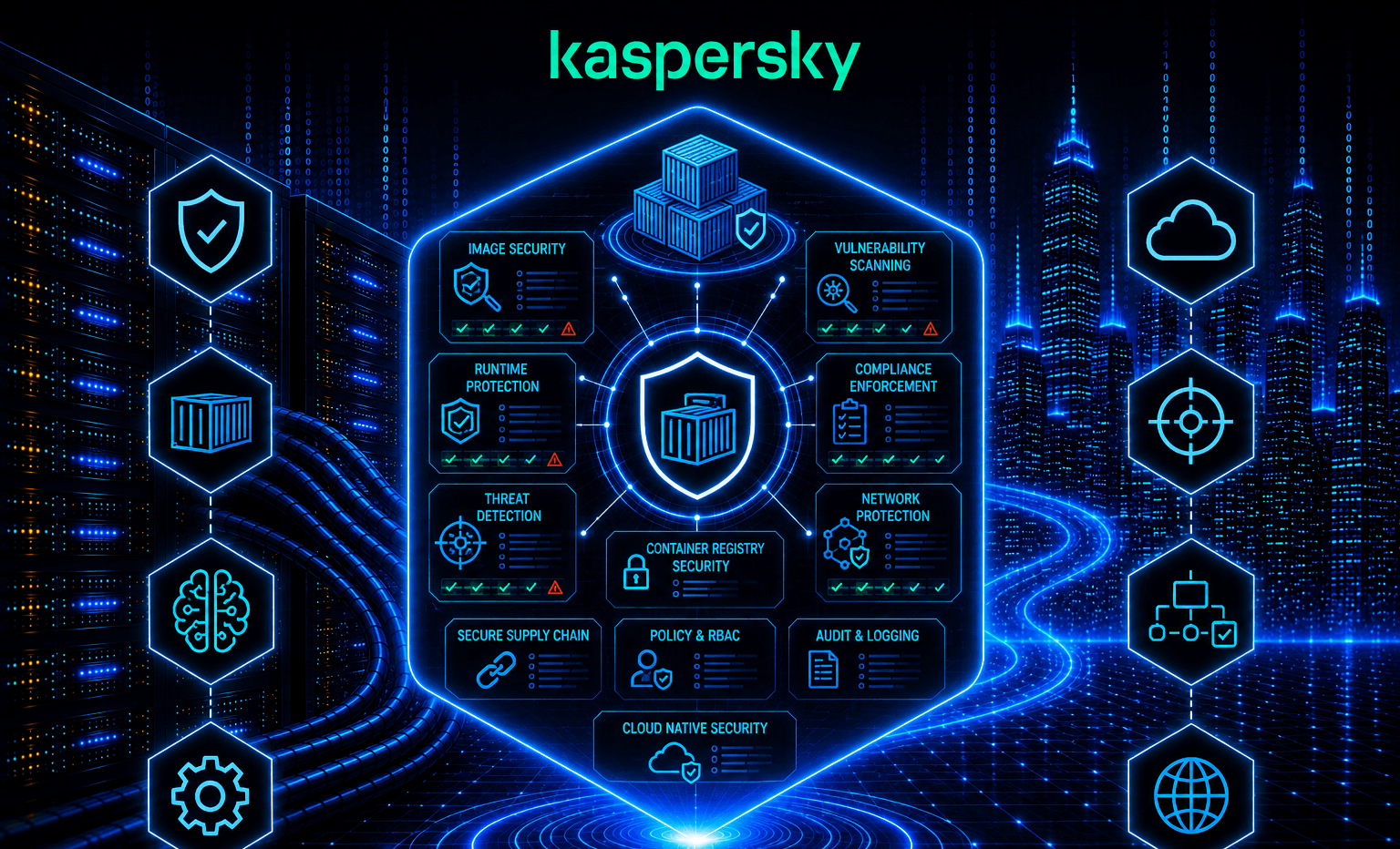
The course describes potential attack vectors against container infrastructures, as well as best practices for their protection and risk mitigation. It also explains how Kaspersky Container Security can protect container infrastructures while taking these challenges and best practices into account.
The theoretical part of the course, combined with hands-on labs, provides participants with the knowledge and skills needed to:
- Protect container infrastructures using Kaspersky Container Security agents.
- Scan containers for vulnerabilities, malicious code, configuration errors, and confidential data.
- Integrate the security solution into the CI/CD pipeline.
What’s New in Course Version 2.4
- Added information about new product functions:
- Monitoring of file operations on worker nodes.
- Monitoring of OS vulnerabilities on worker nodes.
- Creating runtime profiles based on network reputations.
- Integrating SSO and artificial intelligence.
- Sending notifications via webhooks.
- Added the following tasks to the labs:
- Monitoring events related to changes in cluster RBAC objects.
- Working with notifications.
- AI integration.
- Creating a runtime profile based on network reputations.
- Monitoring security events on cluster nodes.
- All course materials have been updated to demonstrate the new web interface of the solution.
- The first chapter, which covers the basics of Kubernetes security, is optional and intended for self-study. Instructors are recommended to start the training course from Chapter 2.
1. Introduction to Container Security
1.1. CI/CD and Microservices
1.2. Containers
1.3. Kubernetes
1.4. DevSecOps
1.5. Security in Kubernetes
2. Architecture and Deployment
2.1. Solution Architecture
2.2. Pre-Deployment
2.3. Deploying the Solution
2.4. Scaling
3. Operation and Maintenance
3.1. Users, Roles, and Scopes
3.2. Integrations
3.3. Deploying Agents
3.4. Security Policies
3.5. Event Log and Reports
3.6. Scanner
3.7. CI/CD Pipeline Stop
4. Maintenance and Troubleshooting
4.1. Data Lifecycle
4.2. Troubleshooting


